
7 sustainability reporting red flags
We think even a modest report is better than no report. That said, there are some important things you want to avoid even in your early reports. Here are some pitfalls to avoid (and what to do instead).
Red flags we routinely see based on our research
After spending more hours than we’d like to admit reviewing hundreds of sustainability reports across a number of industries, we’ve found some recurring issues that can undermine our trust in the content being shared. Not all of these red flags are created equal. Some are much more difficult to address (i.e. lack of data, discussion of trade-offs) than others (i.e. emphasis on philanthropy and giving). And some are worse than others when it comes to the negative impact they can have on trust.
Raising any of the following red flags will likely increase greenwashing risks for your company.
Red flag #1: Lack of relevant data, metrics, or quantification of impacts
Put simply, you need to provide numbers. Those numbers should be relevant to the impacts you're trying to quantify and they should be timely, accurate, and verifiable. It’s important to include discussion on data sources, limitations, and assumptions. Avoid using intensity-based metrics in isolation, be sure to include absolute measures if you’re going to include them.
Do this instead:
Annual sustainability reporting should be embedded into existing data management processes and tools. That way the data collection part of the process is much easier than trying to gather everything in a rush before your report deadline. In cases where you can’t collect the data yet, or don’t have confidence in the accuracy, etc. you can included a description of the specific metrics you plan to use as measures of progress in the future if you’re not able to provide data yet. But make sure you follow up with that data the following year.
Learn more about building a sustainability data management strategy to help create a comprehensive approach to data so that you can unlock credible annual reporting.
Red flag #2: Disproportionate emphasis on philanthropy and charitable giving
We sometimes see half or more of a company’s sustainability report dedicated to charitable giving, philanthropy, “community impact”, or similar. These activities are great as benefits for employees. But in our experience they rarely account for meaningful action on the real impacts to people and nature being created by the company. We commonly see disconnects between the nature, extent, or location of impacts being created by companies and their supply chains and the kind of giving programs being promoted. These disconnects, coupled with the fact that the money or products dedicated to these giving programs can be orders or magnitude smaller than the true costs of the impacts on people and nature.
Do this instead:
Dedicate a relatively small proportion of your external-facing content to this topic. For a 10 page annual report, perhaps this topic gets half a page. Highlight elements of your giving program or philanthropy that are materially linked to your most significant impacts on people and nature. These should be directly related to be credible. Provide context about the nature and extent of the giving or donations being made and the nature and extent of the impacts being created by the company and your supply chain.
Red flag #3: No discussion of trade-offs
Regardless of what kinds of goods or services your company makes or sells, sustainability is inherently complex and involves a variety of trade offs. Attempting to reduce environmental impacts in one way may unintentionally increase other kinds of impacts. For example, trying to reduce your greenhouse gas emissions may inadvertently lead to other kinds of impacts on nature.
Do this instead:
Taking a lifecycle approach to identifying and quantifying trade-offs, not just across types of environmental impacts but also considering impacts across domains (e.g. impacts on consumers, workers, etc.) is challenging but needed. Calling out issues or performance problems where they exist and providing insight about why they exist, the challenges being faced, and the strategy for addressing them moving forward goes a long way when it comes to trust. Nobody is perfect but we need to know what you’re going to do to improve.
Red flag #4: Lack of disclosure about governance
Don’t let the term “governance” confuse you, this is about who has the final say about sustainability-related decisions and who is accountable for performance at the company. Even small companies need some kind of governance when it comes to sustainability. Insider secret: without a high-level discussion of how difficult decisions are made, where the buck stops for unmet goals or targets, and who decides what kind of budget or resources get allocated to sustainability efforts then it’s a clear tell that the company doesn’t really take these issues seriously.
Do this instead:
Provide insight into who is accountable for sustainability in the organization and the mechanisms used to manage performance. For example, the CSO or Head of Sustainability is responsible for establishing annual goals and strategies, which are approved by the Executive Team. Does the company have an internal sustainability steering committee? If so, what role do they play in decision-making (i.e. can they just advise or do they have the authority to make final decisions?) Describe what role, if any, the Board of Directors has in overseeing sustainability at the company. Is there a board committee? How is sustainability performance linked to executive compensation?
Red flag #5: Unsubstantiated generic “green” imagery
Personally, we don’t really mind this one but it’s a red flag when it comes to some greenwashing rules and regulations. Using generic images like wind turbines, trees, etc. is to be avoided. Steer clear of stock images and please don’t serve up AI slop.
Do this instead:
If you’re going to use imagery to help tell your sustainability story then do your best to use images from the company itself. Or in cases where your suppliers or partners have implemented sustainability projects that you’ve been involved in, use images provided by them and be sure to provide context for them.
Red flag #6: Product-level implications implied for company
Lots of companies like to highlight specific products or brands in their portfolio that are considered to be more “sustainable”. We think including one or two properly labeled case studies is fine provided they are linked to broader, company-wide impacts and efforts that include proper substantiation. Unfortunately, we often see companies using product-level certifications to imply that their entire company is “sustainable”.
Do this instead:
Certifications should be a proof point for specific kinds of impacts (e.g. Made Safe for ingredient and material safety) unless they are specifically structured to cover the entire enterprise (e.g. B-Corp). Generally, we think that the best place for product-level sustainability claims, including credible third party certifications, is on product description pages and not on enterprise level evergreen pages. If you’re going to include product-level certification claims on an enterprise level page, make sure you do it right by a) clearly qualifying the claim with product relevance information (i.e. the product types included), b) linking to product description pages that feature the claims, and c) disclosing claim boundaries by noting specific instances or exceptions within a product type, or across the company’s product portfolio, where the claim is not being applied.
Red flag #7: Over-reliance on offsets
Too many companies make neutrality claims for their climate pollution, plastic pollution, and other impacts based primarily on the basis of offset purchases. Unfortunately, there are numerous “certifications” and organizations selling this approach to companies that don’t know better. (Yet another reason why you need to hire an internal subject matter expert, or create one through mentoring and training) These “climate-neutral”, “plastic-neutral” and similar claims are an easy greenwashing tell for savvy consumers. Offsetting in isolation is not a credible approach to meeting climate goals or reducing emissions from your company or suppliers.
Do this instead:
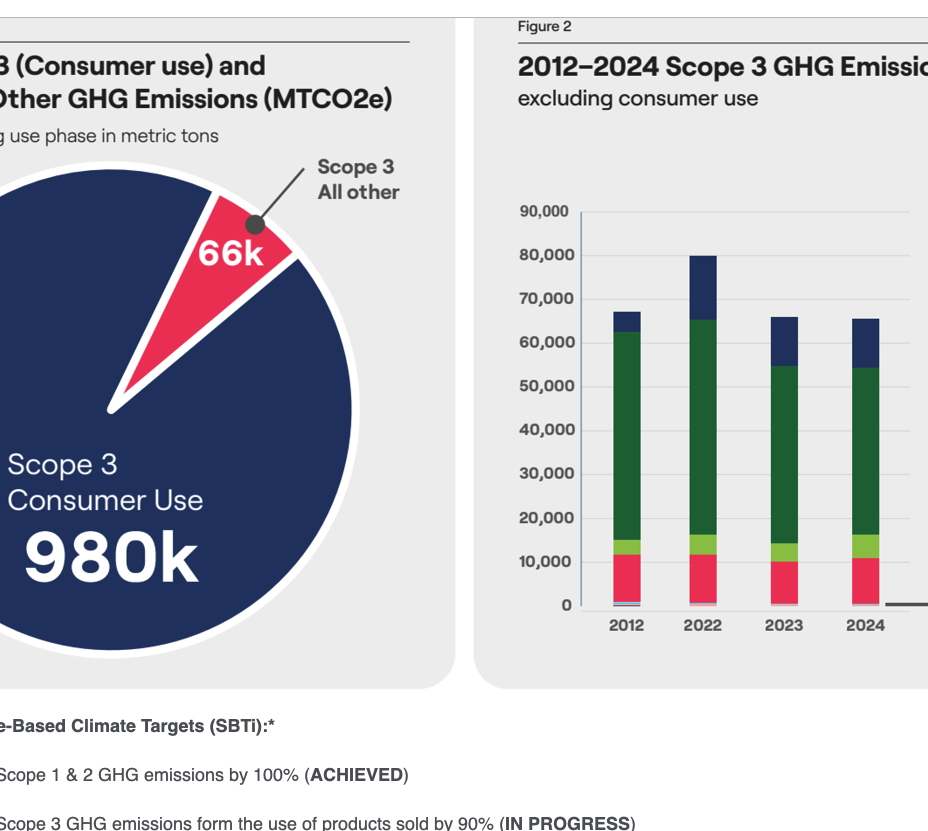
If you’re going to make these claims, which we generally advise against, you also need to be credibly working to reduce your carbon footprint as well. That means publicly disclosing annual emission inventories including Scope 3, describing your plan for reducing emissions over time, and sharing comprehensive performance metrics (i.e. changes in absolute emissions, not just intensity-based measurements).
While we’re not including a dedicated flag for it, we do think that independent verification or audits for sustainability reports issued by larger companies is helpful. Having an external party review the data and claims helps strengthen credibility and can reduce risk. Read about our three indicators of credible sustainability reporting in this article.
Proven ways to boost credibility when marketing safety and sustainability
The good news is that we’ve learned that there is a content formula that is generally applicable across companies and topics: safety, sustainability, and workers rights. Check out part one of our series on Building Compelling Sustainability Content.